Rice buying has several independent dimensions: variety, origin, milling, parboiling or other processing, grain size, broken percentage and cooking behaviour. Treating all of these as one “grade” makes quotations difficult to compare. This guide explains the main Indian buying categories and the decisions an importer should make.
Basmati and non-basmati
APEDA describes Basmati as aromatic rice associated with a defined geographical origin and characteristic slender grains and cooking behaviour. “Long grain” alone is not proof of Basmati identity. Ask for the notified variety, origin and any required identity testing rather than accepting an aromatic description as sufficient.
Non-basmati is a broad commercial category, not an inferior quality class. APEDA's non-basmati overview includes types such as Sona Masuri, Ponni, HMT, IR64 and Swarna. The right choice depends on the buyer's cuisine, processing application, price and cooking preferences. A short or medium grain may be exactly right for a market that does not want extra-long aromatic rice.
Major varieties and trade selections
| Variety / selection | Buying context | Confirm in the offer |
|---|---|---|
| Traditional Basmati | Aromatic rice programmes specifying a traditional type | Exact variety, origin, ageing claim and cooking sample |
| Pusa Basmati 1121 | Commonly requested long-grain Basmati trade variety | Raw, steam or parboiled form; measured grain length and broken limit |
| Pusa Basmati 1509 | Another major Basmati trade variety | Varietal purity, crop year, processing and cooking acceptance |
| Pusa Basmati 1718 | A named Basmati variety listed in APEDA crop reporting | Identity and the agreed physical and culinary specification |
| Pusa Basmati 1401 / 1692 | Named varieties appearing in Basmati crop reporting | Availability and an actual lot sample; do not accept an unnamed substitute |
| Pusa Basmati 1847 / 1885 | Newer named Basmati varieties | Current notified identity, source and suitability for the buyer's programme |
| Sona Masuri | Non-basmati buying programmes using this trade name | Cultivar/source, processing, size and cooking texture |
| Ponni | Non-basmati culinary programmes | Exact selection and raw or parboiled form |
| IR64 / Swarna | Non-basmati bulk or retail programmes | Variety, grain dimensions, processing and broken percentage |
| HMT | Named non-basmati buying category | Source identity and sample-based cooking acceptance |
| PR11 / Parmal selections | Commercial non-basmati offerings | Exact declared variety; “Parmal” alone is too broad for a detailed contract |
| Broken rice | A physical product category for specified food or processing use | Source variety, fragment-size distribution, intended use and current export policy |
For Basmati identity, consult APEDA's new-variety documentation and crop survey. The table is a guide to important buying names, not an exhaustive list of every Indian rice cultivar or a promise that every type is currently in stock.
Raw, steam, sella and brown rice
Separate the cultivar from the processing description. Brown rice retains bran after husking; white rice has undergone further milling. Parboiled rice is hydrothermally treated before milling. In trade, “sella” refers to parboiled rice, while “white sella” and “golden sella” distinguish commercial preparations that must still be defined by sample and specification. “Steam” is also a processing description: ask the mill what process and final characteristics are being offered rather than interpreting the word as a complete technical standard.
Processing affects appearance and cooking behaviour, but it does not change one cultivar into another. If the order is for 1121 Basmati golden sella, an offer for a different rice with similar colour is not an equivalent without buyer approval. Similarly, an ageing claim should identify the crop and storage period and be supported by records.
What a useful rice grade contains
- Varietal identity and purity: name the rice and the agreed tolerance or verification method.
- Grain dimensions: specify whether the measurement concerns uncooked head rice and the method used.
- Broken percentage: agree the definition, sampling and maximum allowed amount. A “5% broken” offer is a contract specification, not a complete quality description.
- Condition: set moisture, foreign matter, damaged/discoloured grain and infestation requirements.
- Cooking performance: approve a sample using a consistent recipe, water ratio and method.
- Safety: define destination-specific residue, contaminant and other analytical requirements.
- Traceability: record crop year, mill, lot, packing date and any validated storage claim.
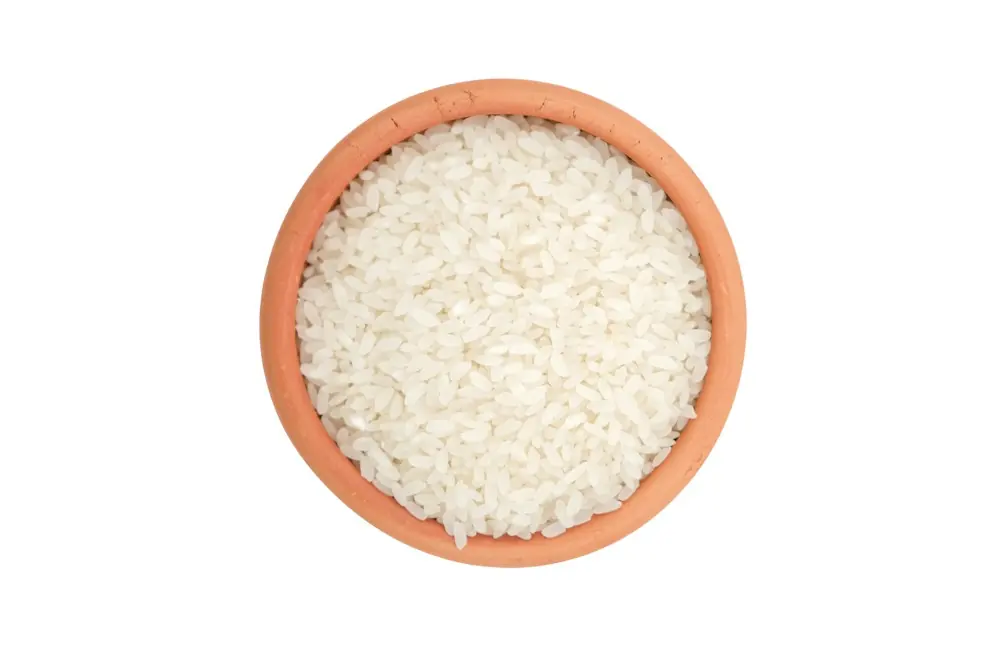
Do not choose rice entirely from a photograph. A cooking test can reveal differences that are not obvious in the uncooked grain. Keep the approved sample and the shipment lot connected through records, and decide how final inspection will compare them.
Export registration and current rice procedures
APEDA's current RCAC FAQ describes contract registration for both Basmati and non-basmati rice and an active APEDA RCMC as a prerequisite for its application process. It also explains destination/port and shipment-detail requirements. Check the current procedure when registering an actual contract rather than assuming older Basmati-only guidance is sufficient.
The same FAQ flags additional inspection or registered-manufacturer documentation for certain destinations. Have the exporter and importer confirm the exact requirement for the rice, mill and country before contracting. Separately check DGFT's current tariff-item policy and customs measures. Policy can differ for broken rice, paddy, brown rice and milled rice; a past notification should not be presented as a permanent rule.
Destination certifications and food safety
A standard commercial document pack is only the beginning. The buyer may need official inspection, phytosanitary documentation, origin evidence, mill registration or destination-specific declarations. Confirm certificate wording and approved facilities before the stock is allocated. A generic “export certificate” is not a substitute for the named document.
For EU programmes, define the relevant pesticide-residue requirements and applicable food controls. Other markets may have their own approval and testing procedures. Organic status, private food-safety schemes and retailer audits require separate verification. A conventional shipment does not become organic because the supplier also sells organic rice.
Packing, containers and arrival
Agree bulk-bag or retail-pack format, liner, net weight, printing, language and palletisation. Ask the mill to define packaging appropriate to the proposed storage and transit. Inspect the container for leaks, odours, cleanliness and previous-cargo contamination. Calculate both weight and volume; bagged rice can reach a weight limit before all nominal cubic capacity is used.
If treatment is required, confirm the permitted process and who issues the relevant evidence. At arrival, check seals, bags, lot codes, weight and visible condition against the packing list. Preserve records and samples if a discrepancy appears. A useful rice enquiry combines variety, processing, broken limit, quantity, packing, destination, requested dates and testing requirements in one brief.
MAKE THE NEXT STEP SPECIFIC
Tell us what you need to source.
Share your product, quantity, destination and specification with our team in Bengaluru, Karnataka, INDIA.
Send a sourcing enquiryExplore the product catalogue