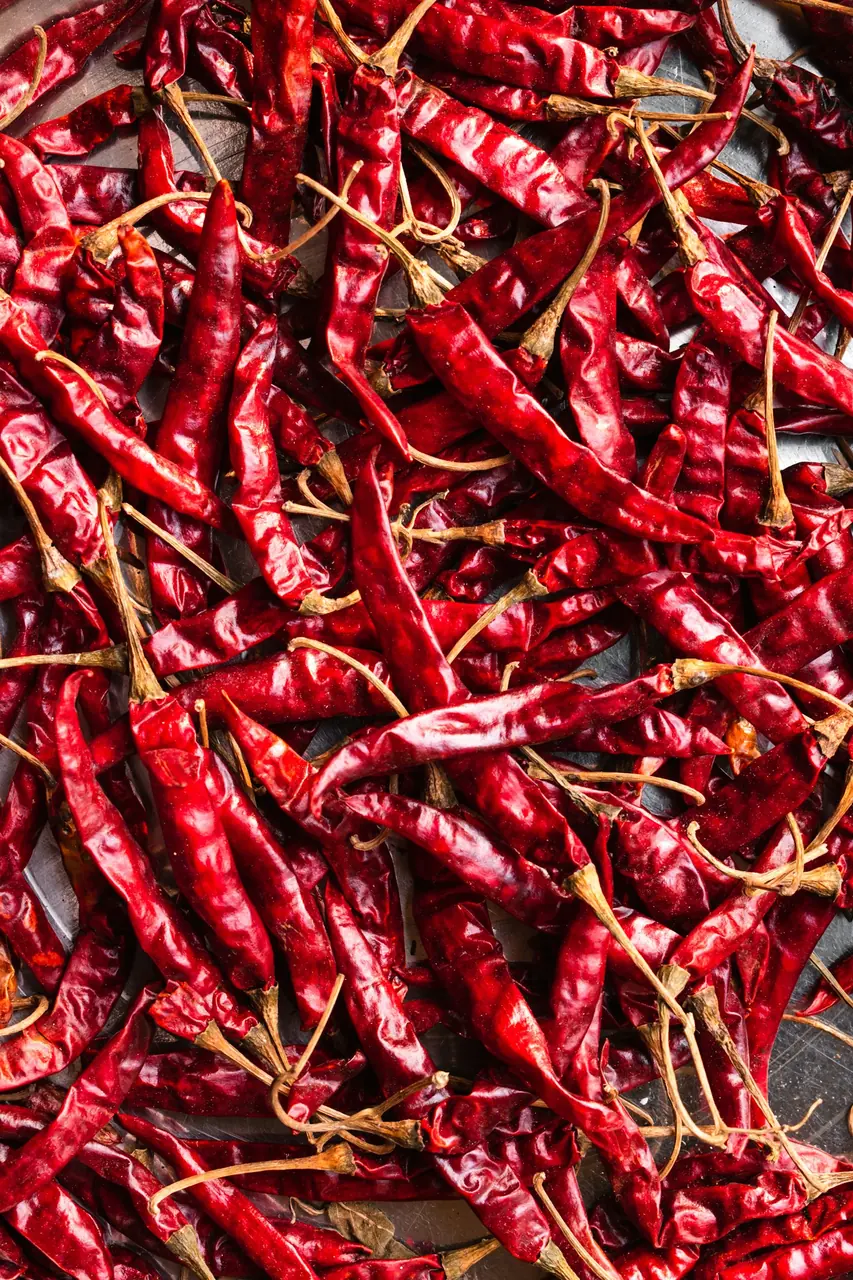
Byadagi chilli is a useful starting point for buyers seeking colour-led chilli ingredients from Karnataka. But buying by name alone is risky: type, origin, colour, pungency, condition and testing must all be tied to the actual lot. A dark red photograph cannot establish any of those analytical results.
What makes Byadagi distinct?
The Spices Board's GI guidance describes Byadagi chilli's production area in Karnataka and its characteristic wrinkled pods. The Board also identifies Byadagi among colour-extraction chilli types in its chilli catalogue. These references explain the product's identity; they are not a certificate for an individual seller's consignment.
Ask for the source area and the precise commercial type. If the offer makes a protected geographical-indication claim, ask for the relevant origin and authorised-use evidence rather than assuming that a purchase through a particular trading centre proves eligibility. A market can handle produce from multiple origins.
Kaddi, Dabbi and comparisons
| Type or comparison | How to approach it | What not to assume |
|---|---|---|
| Byadagi Kaddi | Request the named type, pod condition, origin and lot analysis; typically discussed as a longer, slender pod type. | Every Kaddi lot has an identical colour or heat value. |
| Byadagi Dabbi / Dubbi | Confirm the exact selection; generally discussed as a shorter, broader pod type than Kaddi. | Dabbi is simply a universal “higher grade” rather than a distinct buying specification. |
| Guntur Sannam | Evaluate as a separate chilli type against the intended flavour, colour and pungency target. | It is interchangeable with Byadagi or that all chillies traded in Guntur are Sannam. |
| Teja-type chilli | Specify the type and measured pungency for the buyer's application. | A heat-led product automatically gives the same colour performance as a colour-led selection. |
Use named types to narrow the enquiry, then compare representative samples. If blending is intended, disclose the proposed composition. A blended chilli powder should not be presented as a single-origin, single-type product without the evidence to support that description.
Colour and heat are different measurements
Colour value and pungency answer different formulation questions. ASTA extractable colour is a laboratory measurement; a Scoville or capsaicinoid result describes heat. One does not reliably predict the other. Agree the analytical method, units, laboratory and acceptance limits before comparing two reports.
Do not turn a published characteristic range into a guaranteed shipment specification. Harvest, drying, storage, grading and blending can change the supplied material. Ask for a recent, lot-linked report and an approval sample. For a food manufacturer, test the sample in the actual recipe and at the intended dosage; colour in a bag is not the same as performance in a cooked product.
Whole pods, powder or oleoresin?
- Whole pods: specify stemmed or stemless preparation, broken pods, seeds, foreign matter, moisture and visible defects. State whether the weight includes stems.
- Powder: specify particle size, seed/stem content, colour, pungency, treatment status and microbiological limits. Require traceability back to the source material.
- Oleoresin: specify colour strength, pungency, solubility, carrier, extraction solvent and residual-solvent limits. This is a concentrated ingredient, not merely finely ground chilli.
Whole dried chilli is shown in our catalogue under an indicative six-digit HS reference of 090421; crushed/ground chilli and extracted oleoresins require their own classification assessment. Confirm the full national tariff item for the product form and formulation. A trade name should never be used to bypass that check.
A lot-approval checklist
Agree how the sample is drawn from the consignment and seal retained samples for both parties. Record crop/lot identity, origin, appearance, preparation and packing. Set limits for moisture, foreign material, damaged pods and relevant analytical characteristics. Include residues and contaminants appropriate to the destination and intended use.
Chilli requires careful attention to mycotoxins, pesticide residues, microbiological condition and prohibited colours. The Spices Board's current notifications and mandatory-testing framework should determine official sampling and release requirements. Older circulars have been modified, including distinctions by form and destination; do not rely on a single historical page as the complete current rule.
Certifications and country requirements
Confirm the exporter's applicable CRES registration with the Spices Board. A registration is not proof of GI origin, organic status or compliance with all destination contaminant limits. Those are separate claims requiring separate evidence.
For an EU buyer, check the exact chilli product against applicable residue and import-control measures. For a Gulf or Asian buyer, obtain the importer's current required document and label list. Foodservice, retail powder and industrial oleoresin can have different presentation and documentation needs. If halal, organic or a private quality scheme is requested, verify scope and applicability rather than adding a certificate name automatically to every offer.
Packing and storage
Protect the agreed quality through moisture control, clean handling and packaging suitable for the material. Whole pods need protection against crushing and contamination; powders and extracts may need more specific barrier and container properties. Ask the processor for product-specific storage and handling instructions and evidence for the claimed shelf life.
A good enquiry states Kaddi or Dabbi preference, form, desired colour and heat, quantity, packing, destination and use. Include the test panel and whether a GI claim is required. Mayura can use that brief to discuss a suitable sourcing and verification plan, with the final specification agreed before dispatch.
MAKE THE NEXT STEP SPECIFIC
Tell us what you need to source.
Share your product, quantity, destination and specification with our team in Bengaluru, Karnataka, INDIA.
Send a sourcing enquiryExplore the product catalogue